
Poker Starting Hands: A Simple Chart for Beginners
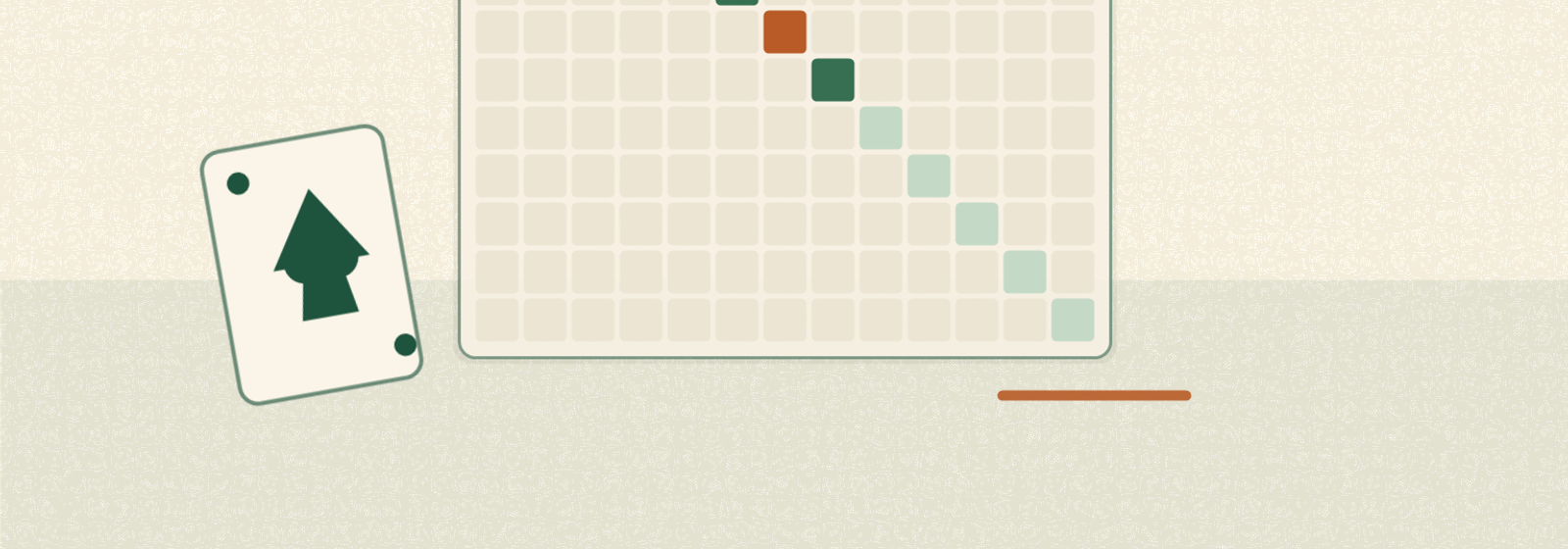
Most money lost in No-Limit Hold’em is lost before the flop, by players who call too many weak hands “just to see what happens.” A starting-hand chart fixes that. It won’t make every decision for you, but it gives a disciplined default: a short list of hands worth entering a pot with, sorted by how strong they really are. Master this one habit and you skip the single most expensive leak in beginner poker.
Why Some Hands Are Worth Playing
Two cards win pots in a few ways: by making a big pair, by making a straight or flush, or simply by being the best hand often enough to bet others off theirs. The hands at the top of any chart do all three. A pair of aces is already the best hand before a card hits the board. Big suited cards like ace-king or king-queen can flop top pair and chase flushes and straights. Small connected cards (suited connectors) miss often but pay off big when they hit a hidden straight.
The hands that drain beginners are the ones that look fine but make second-best hands, exactly the kind that cost you a stack. Ace-seven offsuit is the classic trap: you pair your ace, feel good, and lose to anyone holding ace-king or ace-queen. Poker players call this being “dominated,” and it is the quiet reason so many marginal hands bleed chips. The whole point of a chart is to keep you out of those dominated spots before the trouble starts.
If the basic mechanics of betting rounds are still fuzzy, it helps to anchor the chart in the wider game first. Our walkthrough of how to play Texas Hold’em covers the flow of each street, and the full Texas Hold’em rules fill in the formal details. Once the order of play feels automatic, preflop decisions get much easier.
A Simple Tiered Chart
Group hands into four buckets. Memorize the top two first; the rest comes with experience.
| Tier | Example hands | What to do |
|---|---|---|
| Premium | AA, KK, QK, AK, JJ | Always raise. Re-raise comfortably. |
| Strong | TT–99, AQ, AJs, KQs | Raise from most positions; play aggressively. |
| Playable | 88–22, suited aces, suited connectors (JTs–54s), KQ, AJ | Open in middle/late position; fold to heavy action. |
| Trap / fold | Weak aces (A2–A9 offsuit), K-rag, Q-rag, J9 offsuit, most offsuit gappers | Usually fold, especially early. |
A few notes on reading it: “s” means suited, so AJs is ace-jack of the same suit. Suited hands are meaningfully stronger than their offsuit twins because of the extra flush potential. And small pairs are playable mainly because they can flop a set, three of a kind, which is one of the most profitable holdings in the game. If you want a refresher on which made hands beat which, see our poker hand rankings guide.
Reading the Tiers in Practice
Think of the tiers as confidence levels, not rigid rules. Premium hands play themselves: you want chips in the pot, and you rarely fold them before the flop. Strong hands are still clear raises, but they prefer smaller pots against early-position aggression, since a hand like AQ can be dominated by AK. Playable hands are the trickiest group because their value depends almost entirely on seat and table conditions. A suited connector like 76s is a fine open on the button and an easy fold under the gun. The trap tier exists to be folded; the longer you stare at A9 offsuit hoping it improves, the more it costs you.
A Quick Worked Example
Imagine you hold K9 offsuit. It looks playable: a face card and a decent kicker. Now picture the realistic flop where you pair your king. Anyone holding KQ, KJ, KT, AK, or even AQ that pairs the ace has you beaten or dominated. You will win small pots when you are ahead and lose big ones when you are behind, the textbook losing pattern. Swap that same K9 for KQs and everything changes: now you have the best kicker, a flush draw, and a straight draw all in one hand. Same king, completely different future.
Why Position Changes Everything
The same chart should not apply from every seat. When you act early, several players still have a chance to wake up with a monster behind you, and you’ll be out of position for the rest of the hand. So you play tight: premium and strong hands only. When you act late, on the button especially, you have information, fewer players left to beat, and the advantage of acting last on every street. That lets you open far more hands profitably, including the “playable” tier.
A rough rule: the later your seat, the wider you can go. Acting last is worth so much that a hand you’d fold from early position becomes a clear raise on the button. This single idea separates breaking-even players from winning ones, and it’s worth reading more about in our deep dive on position in poker.
Here is a practical way to picture how the chart widens as you move around the table:
| Position | Opening range | Typical hands added |
|---|---|---|
| Early (UTG) | Tight, roughly the top 10 to 15 percent | Premium and strong only |
| Middle | Moderate, around 18 to 22 percent | Small pairs, suited aces, KQ |
| Late / Cutoff | Wide, around 25 to 30 percent | Suited connectors, weaker suited aces |
| Button | Widest, often 35 percent or more | Many offsuit broadways, more gappers |
| Blinds | Defensive, situational | Depends heavily on the raiser and the price |
These percentages are guidelines, not laws, and good players adjust them based on who is in the pot. The shape of the idea is what matters: a steady widening as risk drops and information rises.
Beginner Mistakes the Chart Prevents
- Limping in. Just calling the big blind instead of raising lets everyone in cheaply and surrenders the initiative. If a hand is worth playing, it’s usually worth raising. If it isn’t, fold.
- Playing any ace. “I have an ace” is not a reason to call. Ace-four offsuit is a folding hand from early position, full stop. Weak aces make weak top pairs and dominated kickers.
- Falling in love with suited cards. Suited helps, but seven-two suited is still trash. The suit adds a few percent, not a new tier.
- Ignoring the players ahead. A hand you’d open with becomes a fold when someone has already raised and re-raised in front of you.
- Calling instead of folding or raising. Flat-calling a raise out of position with a marginal hand is the worst of both worlds. When you face a raise with a genuinely strong holding, consider whether three-betting preflop is the stronger play; with a weak hand, just let it go.
Adjusting the Chart as You Improve
A chart is a starting point, and the best players bend it constantly. Two factors should pull your ranges around more than anything else: who is in the pot and how the money plays after the flop. Against a tight player who only raises premium hands, a holding like AJ that the chart calls “playable” quietly slides toward a fold, because you are often dominated. Against a loose, passive table that lets you see cheap flops, speculative hands like small pairs and suited connectors climb in value, since their payoff comes from the rare big hand and these opponents pay you off.
This is also where understanding price matters. A suited connector is worth chasing when the implied payoff is large, and a coin-flip draw might be worth a call when the pot is laying you the right number. Learning pot odds turns vague “feel” into arithmetic you can trust, and pairs naturally with thinking in expected value, the long-run profit of a decision rather than the result of one hand. The chart tells you what to play; the math tells you how much it is worth.
Turning the Chart Into Real Skill
A chart is training wheels, not a final answer. As you log hands, you’ll start to feel when a “fold” hand becomes a steal against tight opponents, or when a “playable” hand should hit the muck against an aggressive table. The fastest way to build that intuition is reviewing your own decisions, a study tool like DEEPFOLD lets you replay hands and check your preflop ranges against solver-approved play. Start with the four tiers, respect position, stop limping, and you’ll already be ahead of most of the table.
Frequently Asked Questions
What are the best poker starting hands to play?
The strongest starting hands are premium holdings like AA, KK, QQ, AK, and JJ, which you should always raise and re-raise comfortably. Next come strong hands such as TT to 99, AQ, AJs, and KQs that you raise from most positions.
Does position change which starting hands I should play?
Yes. From early position you play tight, premium and strong hands only, because players behind can still wake up with a monster and you act out of position all hand. The later your seat, the wider you can open, with the button playing the widest range of all.
Why are weak aces like A7 offsuit considered trap hands?
Weak aces are easily dominated: you pair your ace and feel good, then lose to someone holding AK or AQ with a better kicker. They make weak top pairs that win small pots when ahead and lose big ones when behind.
Why are suited hands stronger than offsuit hands?
Suited hands are meaningfully stronger than their offsuit twins because of the extra flush potential, but the suit only adds a few percent rather than a whole tier. Seven-two suited is still trash, so do not overvalue the suit.
Keep learning
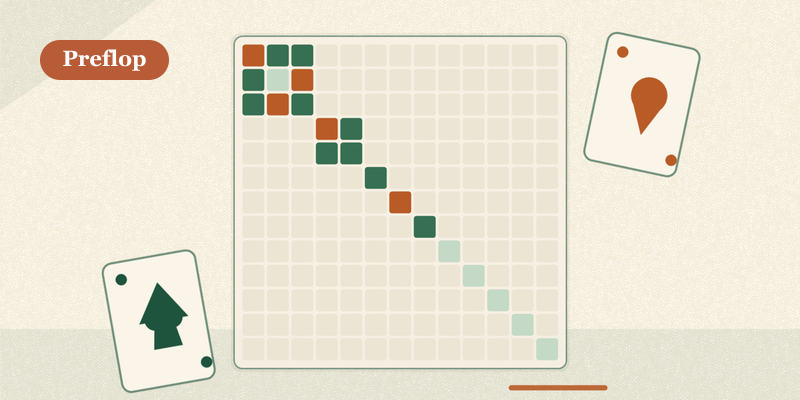
Poker Preflop Charts: Opening Ranges by Position
How to read poker preflop charts: why position sets your range, opening ranges from UTG to the button, 3-bet and calling ranges, and beyond.
Read lesson →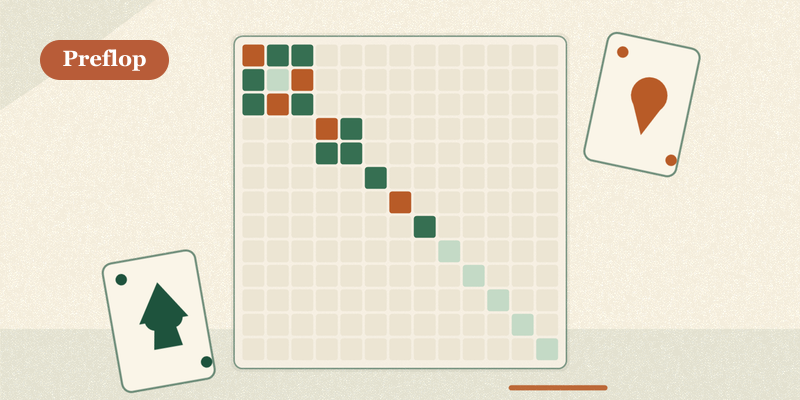
3-Betting Preflop: Building a Range That Prints Money
What a 3-bet is, why a polarized vs linear range matters by position, sizing, and how to stop folding to 4-bets when you should jam.
Read lesson →
Poker Tilt: How to Recognize It and Stop It Costing You
What tilt is, the common types, why it quietly turns winning players into losing ones, how to spot your own tilt early, and concrete techniques to shut it down.
Read lesson →