
3-Betting Preflop: Building a Range That Prints Money
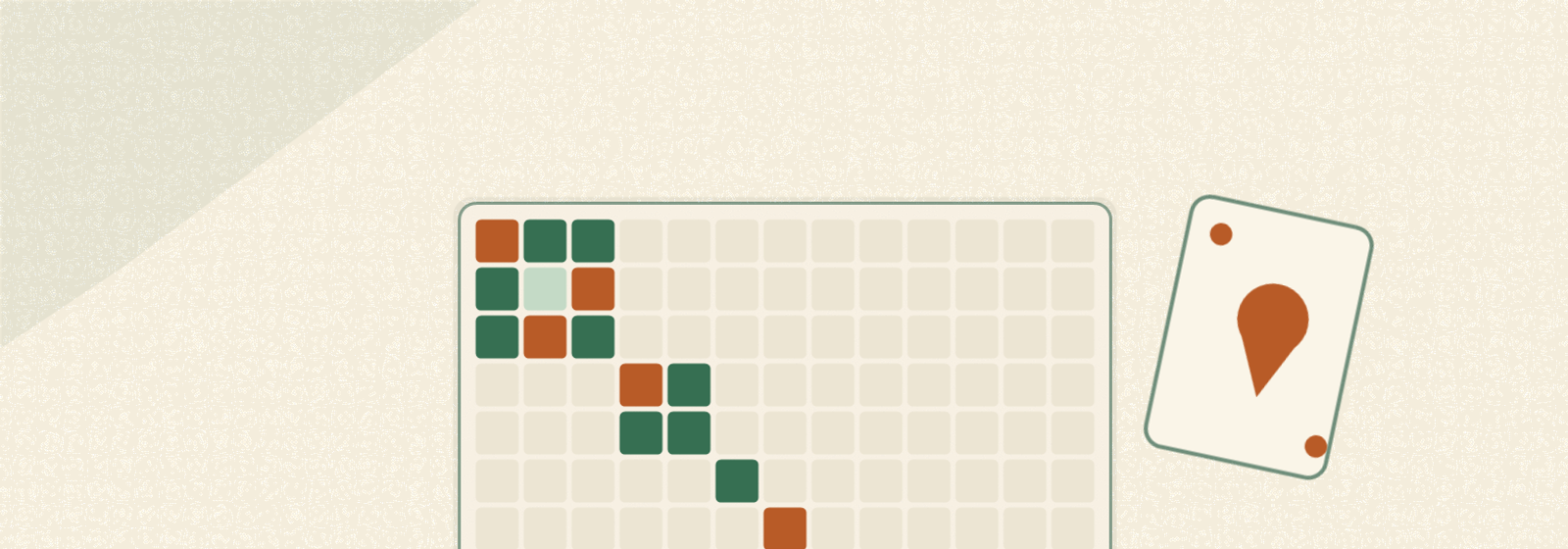
Most recreational players treat the 3-bet as a panic button reserved for aces and kings. Strong players treat it as a structured weapon, a way to isolate weak opponents, deny equity, and build pots with the right hands in the right spots. That difference is worth several big blinds per hundred hands, and it starts with understanding what a 3-bet actually is.
What a 3-bet is (and why “the third bet” is misleading)
A 3-bet is the third bet in a sequence. The blinds are the first “bet,” an open-raise is the second, and a re-raise over that open is the third, the 3-bet. From there a 4-bet is the next re-raise, and a 5-bet is usually all-in at typical stack depths.
People reach for the 3-bet for two very different reasons, and confusing them is the root of most leaks:
- For value. You hold a hand that wants more money in the pot and is happy to get called or even 4-bet, think QQ+, AK, and sometimes AQs or JJ depending on who opened.
- As a bluff. You hold a hand that would rather not see a flat call, and would prefer your opponent to fold outright. These are “light” or “semi-bluff” 3-bets.
The mistake is 3-betting hands that are too good to bluff but not good enough for value, the trap zone. Hands like KQo, TT, or AJo facing a tight early-position open often play better as a call than a re-raise, because they fold out worse hands and get called by better ones. If you are still mapping which hands belong where, our starting hands chart is the foundation this entire article sits on.
Polarized vs linear: the single most important distinction
How you construct a 3-betting range depends almost entirely on position. There are two shapes, and picking the wrong one is a quiet, expensive error.
A linear (also “merged” or “depolarized”) range 3-bets your strongest hands as a continuous block from the top down: best hand, second best, third best, and so on. You are not bluffing, every hand wants to be in the pot.
A polarized range splits into two groups with a gap in the middle: a chunk of premium value hands and a chunk of weak bluffs, with the medium-strength hands removed (they call instead).
| Polarized range | Linear range | |
|---|---|---|
| Shape | Nuts + bluffs, gap in the middle | Top-down block, no gap |
| Best used | In position vs a late open; vs a wide opener | Out of position; vs an early-position (tight) open |
| Example bluffs | A5s, A4s, K9s, suckered suited connectors | n/a, value only |
| Why it works | Bluffs have blockers and playability; value gets paid | Strength density beats a wide range without needing bluffs |
The logic: when you are out of position against a tight range, you want every hand in your 3-bet to be strong on its own, because you will be at a positional disadvantage postflop and cannot rely on realizing bluff equity. So you go linear. When you are in position against a late opener who is raising a wide, weak range, you fold out their junk with bluffs and stack their second-best hands with value, so you polarize.
Building the value + bluff pairs
A good polarized 3-bet isn’t “premiums plus random trash.” Your bluffs should be chosen for two qualities:
- Blockers. Hands containing an ace or a king reduce the combinations of AA, KK, and AK your opponent can hold, making it less likely they continue. This is why A5s and A4s are textbook 3-bet bluffs, the ace blocks their value 4-betting range while the wheel suit gives you a backup straight and flush.
- Playability. Suited hands flop flushes and straights and realize their equity when called. A2s–A5s, suited connectors, and suited gappers make far better bluffs than offsuit junk like K4o, which has neither blocker value nor postflop legs.
A simple working ratio: weight your range so value comfortably outnumbers bluffs out of position, and the two are closer to balanced in position. You do not need a perfect game-theory ratio at the table, you need to stop 3-betting pure value-killers and start adding bluffs that actually have a plan. If the theory side interests you, our primer on GTO poker explains why balance matters against thinking opponents.
Sizing: in position vs out of position
Sizing is not a feel decision, it follows position and the size of the pot you are attacking.
- In position, you can 3-bet smaller, roughly 3x the open is standard (an open to 2.5bb gets re-raised to about 7.5bb). Acting last postflop is worth real money, so you do not need to charge as much to make your opponent’s calls awkward.
- Out of position, you size larger, about 4x the open, because you forfeit positional advantage and want to either take the pot down now or play a bigger pot where your range edge counts. A smaller OOP 3-bet invites too many flat calls that punish you postflop.
- Against limpers, an isolation raise is a different animal, but the instinct is the same: size up to punish the weak hand and play heads-up.
The deeper principle is denying equity: you want your opponent’s marginal hands to make a mathematical mistake when they call. Sizing too small lets every suited connector come along profitably; sizing correctly makes those calls bleed. Pot odds is the math underneath every one of these choices.
Facing the 4-bet: stop folding when you should jam
Here is where most of the money is lost. You 3-bet, your opponent 4-bets, and the reflex is to fold everything but aces, which is exactly what good players exploit, because a player who only continues with AA/KK is printing folds for them.
A workable response framework at ~100bb:
- Jam (or call) your value. AA and KK go all in happily. QQ and AK are usually jams against a standard 4-betting range, though they tighten up against a nit who only 4-bets the absolute top.
- Fold the worst bluffs. A 3-bet bluff that gets 4-bet has done its job by trying, most of these (K9s, weak suited connectors) simply fold. There is no shame in it.
- Keep a few bluff-jams. This is the advanced layer: occasionally 5-bet jam a hand like A5s as a bluff. The ace blocks AA/AK, and the move puts maximum pressure on QQ/AK, which now face an agonizing call.
The single biggest fix for most players is not folding more, it is folding less of their strong-but-not-premium hands. If you reflexively muck AK or QQ to a 4-bet, you are over-folding, and observant opponents will 4-bet you relentlessly until you adjust. The whole battle is positional, so if any of this feels abstract, revisit position in poker, every decision above flows from who acts last.
Knowing the theory and executing under pressure are different skills. Drilling these exact spots, 3-bet, get 4-bet, decide, against a trainer that flags your over-folds is the fastest way to internalize them, and tools like DeepFold let you rep the decision until it is automatic.
The takeaway
A 3-bet is a constructed range, not a hand. Go linear out of position and polarized in position. Pick bluffs with blockers and playability, not offsuit junk. Size up out of position, down in position. And when the 4-bet comes, continue with your strong hands instead of surrendering them. Build the range deliberately and the 3-bet stops being a panic button and starts being the most profitable preflop tool you own.
Frequently Asked Questions
What is a 3-bet in poker?
A 3-bet is the third bet in a preflop sequence: the blinds count as the first bet, an open-raise is the second, and the re-raise over that open is the third, or 3-bet. From there a 4-bet is the next re-raise and a 5-bet is usually all-in at typical stack depths.
When should you use a polarized vs linear 3-bet range?
Use a linear range out of position or against a tight early-position open, where you 3-bet your strongest hands top-down with no bluffs. Use a polarized range in position against a late, wide opener, splitting into premium value hands plus weak bluffs while medium hands just call.
What hands make good 3-bet bluffs?
Good bluffs have blockers and playability, so suited aces like A5s and A4s are textbook choices because the ace blocks the opponent's value 4-betting range while the suit gives backup straight and flush potential. Suited connectors and suited gappers also work, but offsuit junk like K4o makes a poor bluff.
How big should a 3-bet be?
In position, 3-bet roughly 3x the open since acting last postflop lets you charge less, so a 2.5bb open becomes about 7.5bb. Out of position, size larger at about 4x the open to deny equity and avoid inviting too many flat calls that punish you postflop.
Keep learning
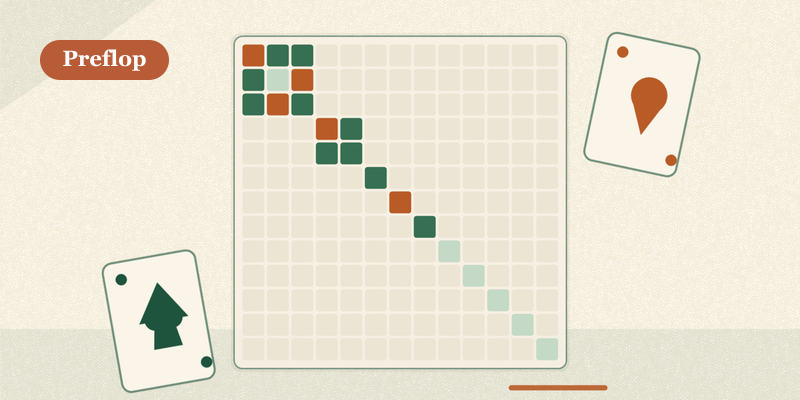
Poker Preflop Charts: Opening Ranges by Position
How to read poker preflop charts: why position sets your range, opening ranges from UTG to the button, 3-bet and calling ranges, and beyond.
Read lesson →
Poker Starting Hands: A Simple Chart for Beginners
Which hands to play and which to fold before the flop, a no-nonsense starting-hand chart and how to adjust it by position.
Read lesson →
Poker Tilt: How to Recognize It and Stop It Costing You
What tilt is, the common types, why it quietly turns winning players into losing ones, how to spot your own tilt early, and concrete techniques to shut it down.
Read lesson →